


Ari Rosenthal Photography
Ari Rosenthal Photography
Music and Entertainment
The Soundtrack of your Ceremony and Reception
Imagine a wedding without music. From moving songs at the ceremony to classy cocktail hour tunes to the late-night dance jams, music does so much to set the tone at a wedding. After a serious wedding ceremony, your guests will be ready to let loose and celebrate at the reception with lively tunes that energize and give your party life.
Ceremony Music
What have you always envisioned for the music style to your ceremony? A vocalist? String quartet? Solo pianist? When weighing your options for ceremony musicians, think back to past weddings you’ve attended. What did you like about the music for each ceremony? What will work with your wedding style and venue?
Rules and Restrictions
Do your homework before you start. Some ceremony sites and officiants may have strict guidelines about which music can and can’t be played during a ceremony. Secular locations may also have guidelines you’ll need to be aware of, along with setting limits on the noise or space allotted for a band.
The type of music you envision that works with your wedding theme will determine what musicians may work the best. Classical, traditional, modern, country or a mix. Will the musicians continue playing during cocktail hour?
Setup Space and Size
Your ceremony venue should be considered when putting together your ensemble. For example, a huge brass quintet and a small chapel won’t be a match—the sound may overwhelm the space. If you’re having an outdoor wedding, you probably can’t use a traditional piano, but if electricity is available, an electric piano could work. Complement it by adding a string instrument such as a violin or cello.
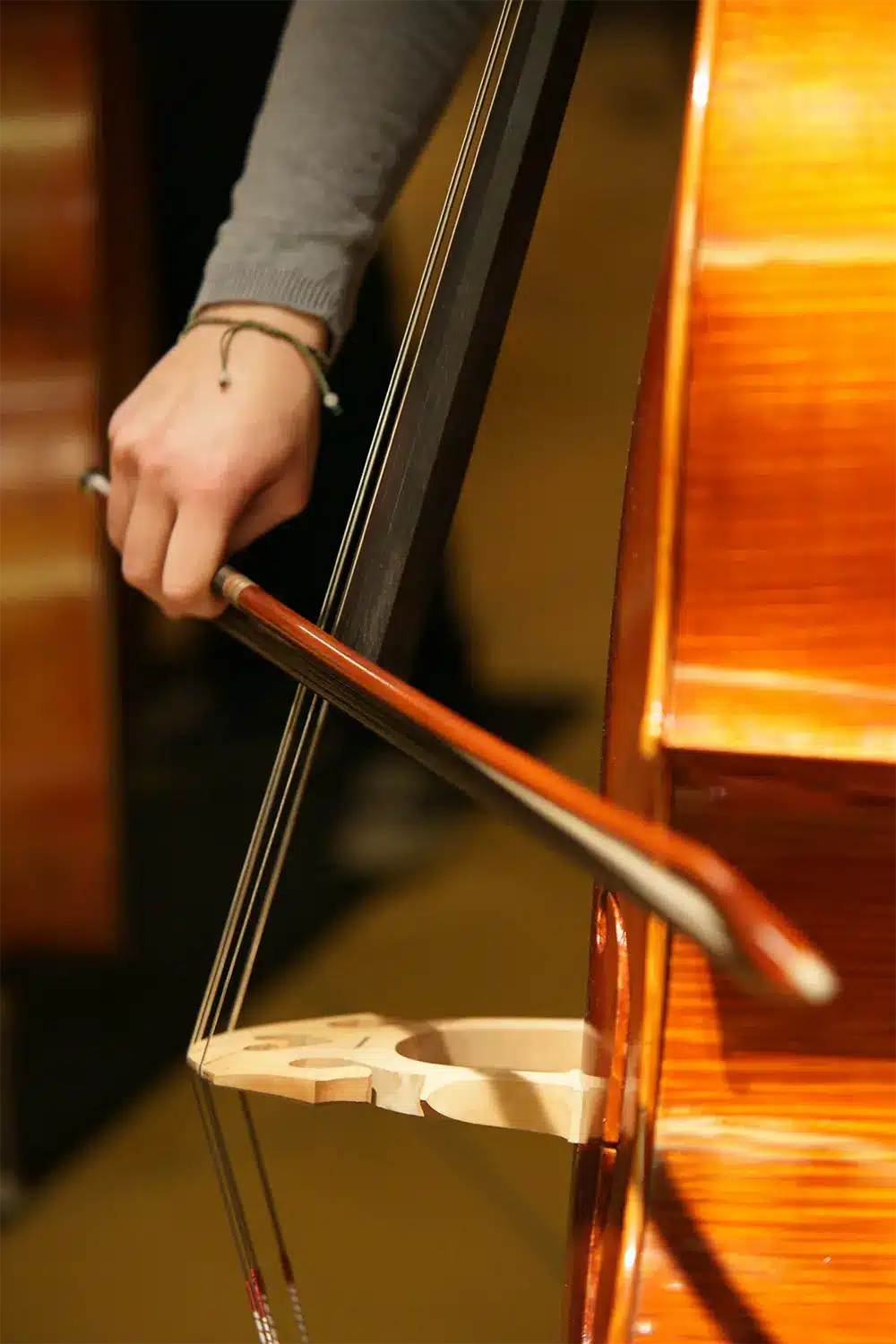
Philippe Bout- Unsplash
Dave Akshar- Unsplash
Chamber Ensembles
Add classic style and elegance to any wedding ceremony, cocktail hour and reception with Chamber ensembles. An ensemble with a flute, cello, violin or harp will set an exquisite mood in a church or temple, at home, in a hotel or banquet hall. When size allows, brass instruments add a fun, dramatic touch.
For the ceremony, the ensemble may play the traditional wedding march or a song that has special meaning to you. A well-prepared ensemble should offer selections ranging from Bach and Vivaldi to waltzes, contemporary love songs and traditional or ethnic music.
The DJ Option
Depending on the ambiance you want to create and the budget you have for your ceremony, a DJ can play the exact music you want and provide equipment to amplify the officiant and vows. The difference is performance or re-recorded.
Selecting the Right Musicians
Once you and your fiancé have some ideas in mind, visit bridal shows, review bridal publications and online sources like pbnewi.com. Ask for referrals from recently married friends. You could also work with an experienced talent or booking agency that offers convenient, one-stop-shopping for all your wedding music needs. Narrow down your options, and arrange meetings to hear your musicians and singers in person before signing any contracts.
Most ensemble groups offer online demos and a repertoire list. Ask how flexible they are about tailoring their presentation to your taste and budget. Ask about their attire, as some groups will even coordinate their attire for your wedding scheme.
After you’ve secured musicians for your ceremony, they can help you decide what songs to include and if they can, accommodate personal selections.
Consider the Flow of the Ceremony and Where the Music Fits In
- Prelude music should be light, ambient music that sets the mood while guests are seated and waiting for the ceremony to begin. It usually starts when the doors open but no later than 20 minutes before the beginning of the ceremony.
- Processionals come next, which accompanies the entry of the extended wedding party—family, attendants and bride. The same song can be used for each, but we love the idea of changing to another song when the bride enters to add drama and highlight the big entrance.
- Interlude songs can be played during significant moments, such as the unity candle lighting, the ketubah signing or space out the flow of the ceremony.
- Recessional is the conclusion of the ceremony. As the name implies, this music accompanies you as you make your exit and is traditionally bright, lively and celebratory—a reflection of your joy.
- Postludes can be included, which is a selection played while guests exit the ceremony.

Riley Grace Photography
JGonia Photography
Reception Music
Cocktails and Dinner Music
Receptions normally begin with a cocktail hour to allow guests to mingle while awaiting the arrival of the guests of honor. Background music is a must for this but conversation is key during cocktails and dinner. The music should set the mood, but not intrude. You have three main options: use the musicians that played during your ceremony, use the band or DJ that will be playing at your reception, or hire entirely different musicians.
If you go with your reception’s DJ or band, make sure they keep it on the softer side. You might even want to make a list of songs to be played during this time to keep the softer music on track.
Reception and Dancing Music
Once the cocktail hour has ended, guests are done with dinner and dessert, the main celebration begins — it’s time to hit the dance floor! Let’s face it, this is one critical decision that can make or break an entire wedding. Whether you hire a band or DJ, your selection of musicians will be a guaranteed success as long as you provide a wide variety of music. From ‘50s doo-wop to disco, pop or rock, diversity is the key.
Consider the Venue
Your ceremony and reception site might impact your choice of music and entertainment. Communicate with your site manager so you are aware of any restrictions and so they are aware of your plans ahead of time. If your entertainment has never performed at your chosen ceremony or reception site before, ask the site manager when they can visit the venue to make sure it meets their needs in terms of space, electricity, and lighting.
What and When
Fortunately, most musicians who specialize in weddings are talented professionals. So, the first question to ask yourself is, live band or DJ? While there are pros and cons to each, it always comes down to personal taste and budget.
When hiring live music, the size of the group needed is generally determined by the number of guests. For up to 150 guests, a five-piece band is generally recommended; 150 to 250 guests call for a larger group of six to seven; and for 250 or more, eight or more is best. DJ’s have the ability to play a wide variety of songs, often provide lighting and audio-visual services and are usually less expensive than live music.
The best musicians can be booked up to a year in advance, so reserve your entertainment as early as possible. This way, once you find someone you like, availability is less likely to be an issue.
CZ Photography
Abib- Unsplash
Bands
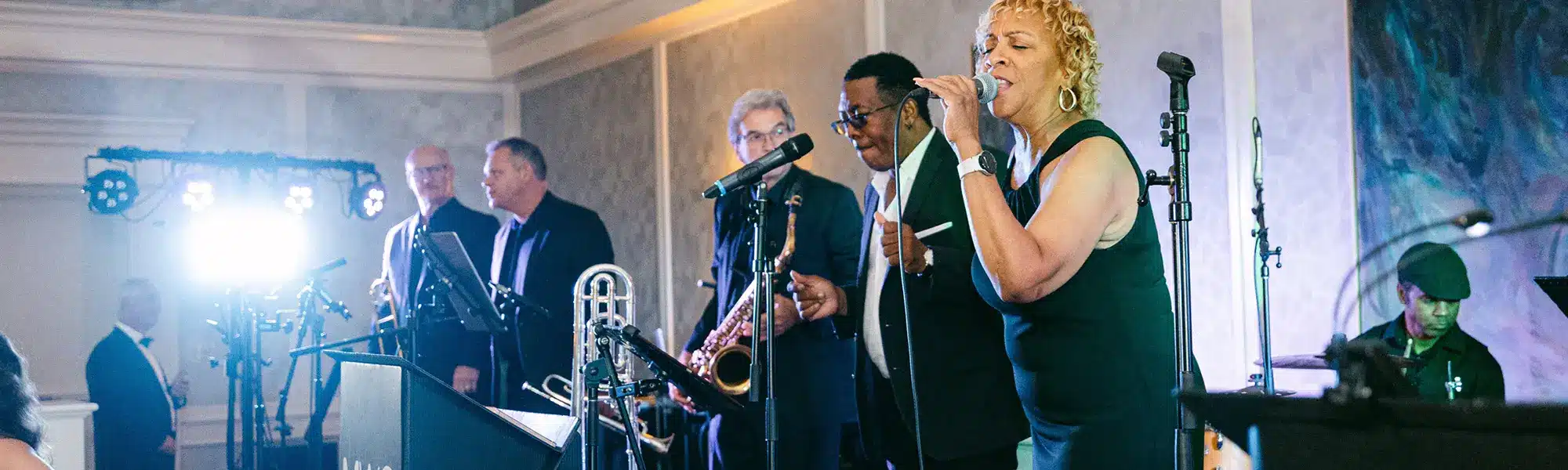
For a large, formal dinner and dance reception, consider hiring a band. Live music gives the evening a sort of festive energy and is a wonderful option if your budget allows. The key is finding a band that caters to weddings. These musicians offer versatility and will appeal to guests of all ages.
Bands are typically multi-member ensembles that include vocalists, guitarists, a bass player, a pianist or a keyboard player and a drummer. The lead vocalist may also act as emcee for the evening. Bands usually charge based on the number of members in the group. To find a band, elicit the help of a booking agent who represents the kind of entertainment you’re looking for.
Keep in mind that any live entertainment will require breaks, so find a solution that ensures music is always playing. If the band is large enough, it’s possible the band members can stagger their breaks so that someone is always playing. They may assist, or you can always configure a portable music-streaming and speaker hook-up to play some of your favorites that the band might not attempt.
DJs
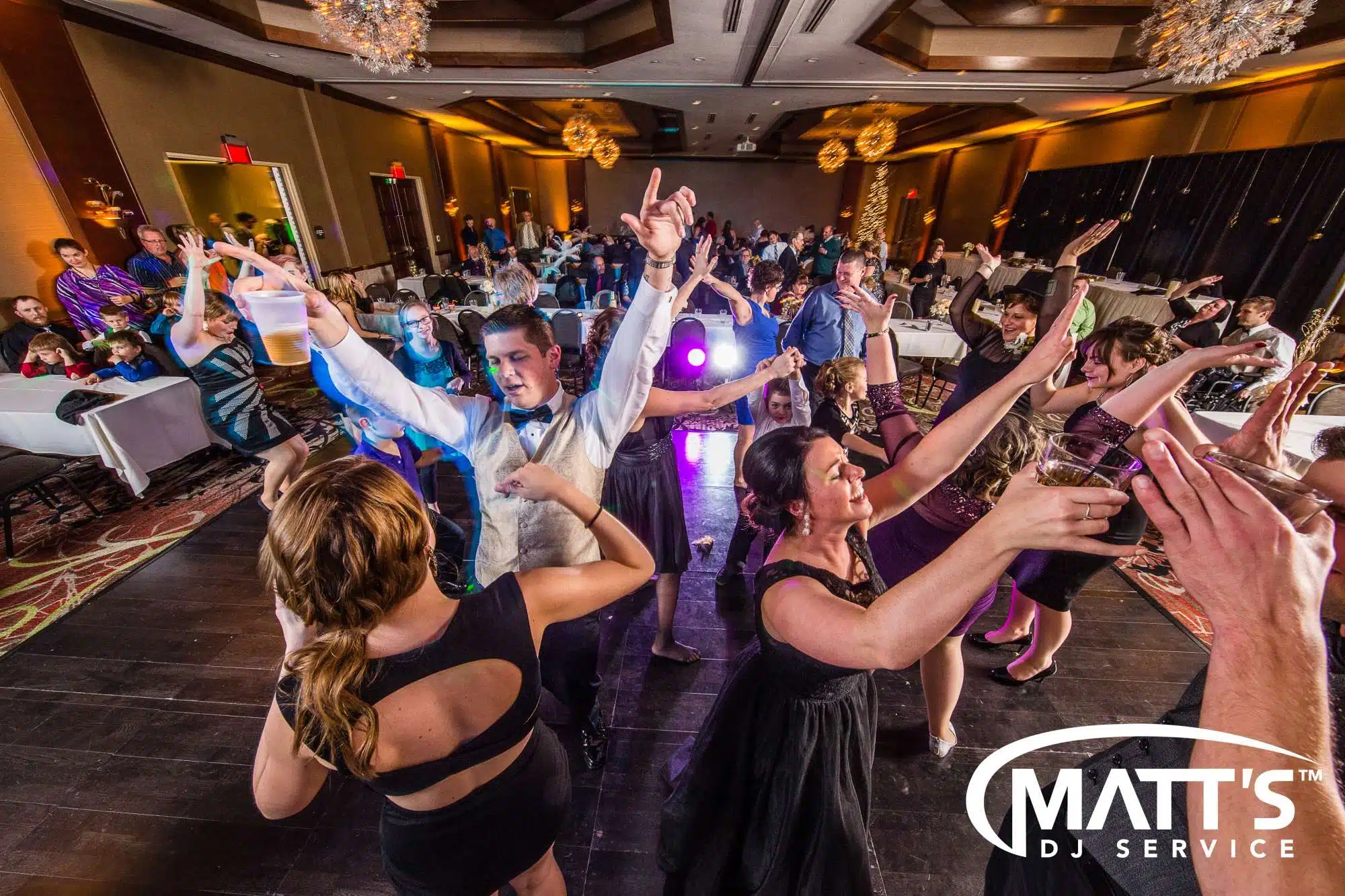
A DJ is usually more cost-effective and can offer an almost infinite variety of music. Additional services such as specially lighting, floor monograms, audio-visual services can be added to a package but usually include additional cost. The added bonus with a DJ is – no breaks.
An important factor in selecting a DJ is personality. Are you looking for a crazy-fun, “put a ring on it” party animal or an upscale, keep-it-classy entertainer? They will probably be your emcee as well, handling introductions, toasts and special dances. We recommend you watch a live performance to confirm you are on the same page. A quality DJ can read the crowd and ensure the dance floor stays full of dancing guests.
Before and After the Decision is Made
Ask for and follow up on several references. Make sure that your musicians can play the song for your first dance, or that the DJ has a clean copy of the original recording. Communicate clearly and clarify what songs and events (first dance, father & bride dance, bouquet and garter toss, etc.) you do or do not wish to include. Decide on the details ahead of time; make a “do not play” list of any songs you simply can’t stand and a “must play” list of songs you don’t want to miss.
Never book entertainment without hearing the music live first. It is equally important to find out the range of their band’s musical repertoires so there’s little something for everyone.
The Nitty Gritty
In terms of expense, a live band will almost always cost more than a DJ. Keep this rule in mind: if you can’t afford a good wedding band, hire a DJ.
All things considered, whether you go for a band or a DJ, your dance party will be a guaranteed success as long as you treat your guests to a wide variety of music. From Frank Sinatra to Whitney Houston to Béyonce, diversity is key in playing a little something for everyone.
As with other wedding vendors, make sure the ins and outs of your agreement with your musicians is very clear and in writing. This includes payment, start and end times, fees for playing overtime, alternate plans if a musician is sick the day of your wedding, etc. If any of your vendors don’t use a contract, put all the details into a document and send one to the vendor and keep one for your records. Confirm all the details with your musicians about two weeks prior to your celebration.
Once you’ve done your homework, hired musicians for each stage of your wedding day, and worked out the details, you can rest easy. That is, until it’s time to start practicing your dance moves.
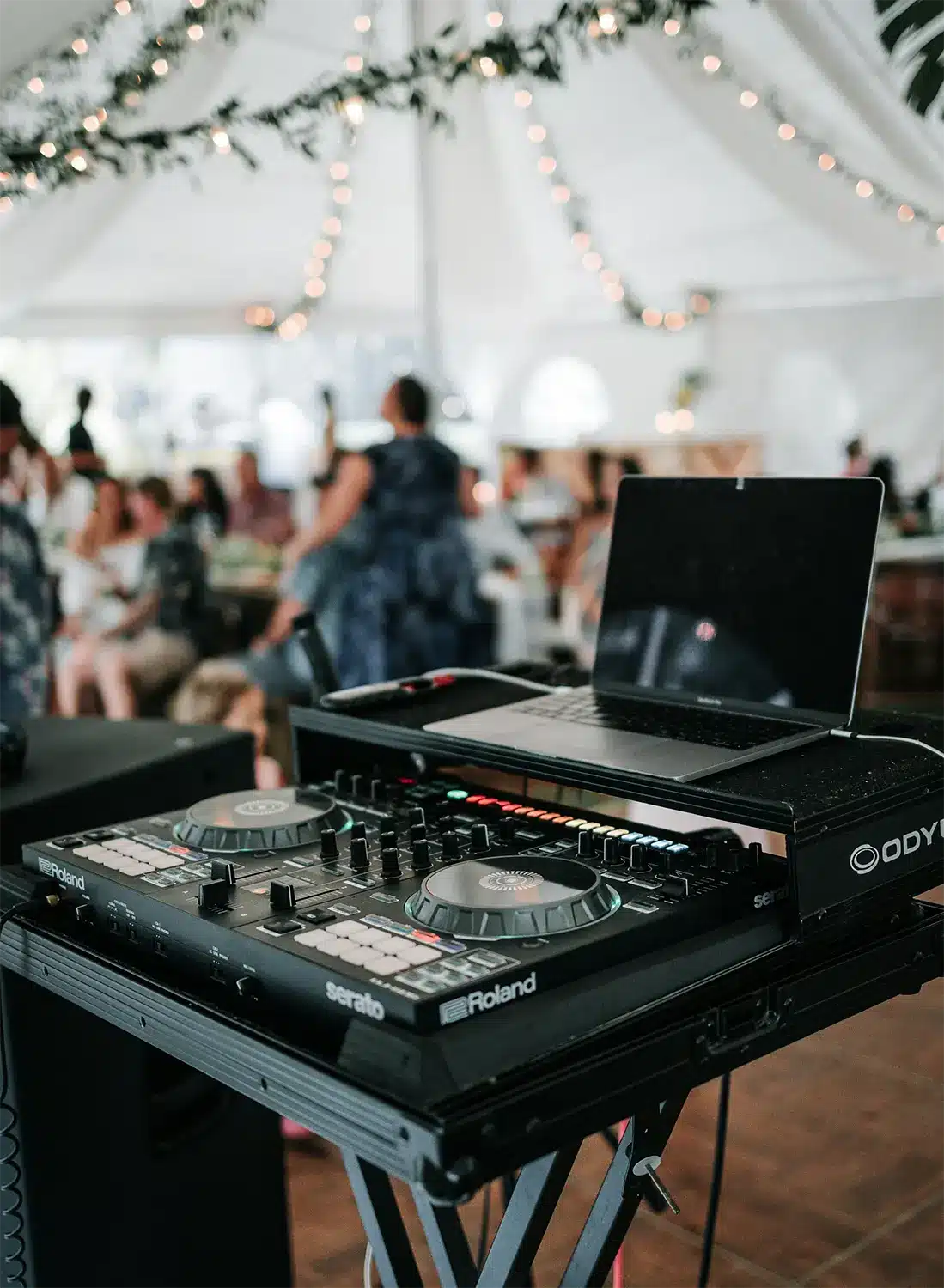
Zane Persaud- Unsplash

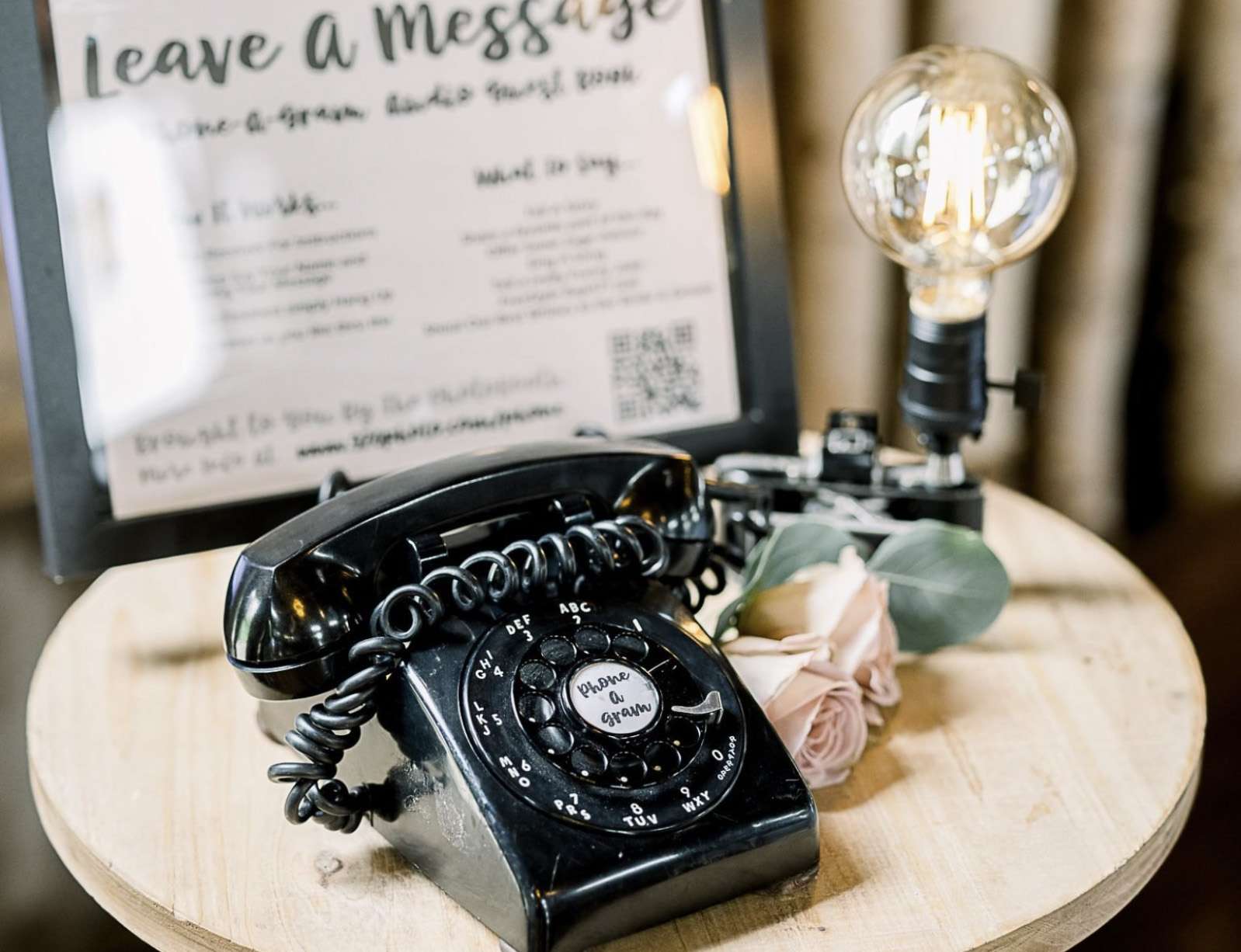
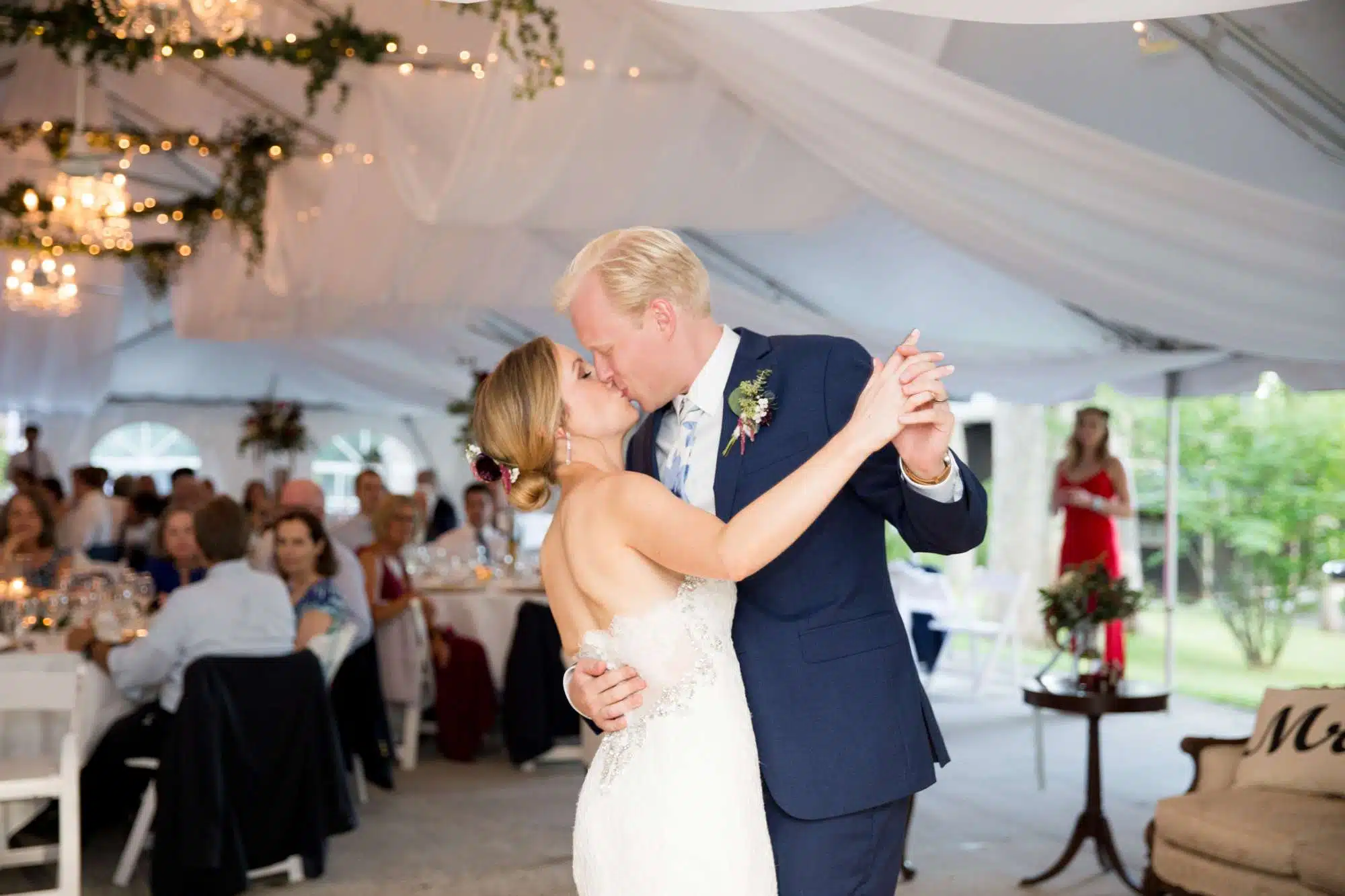
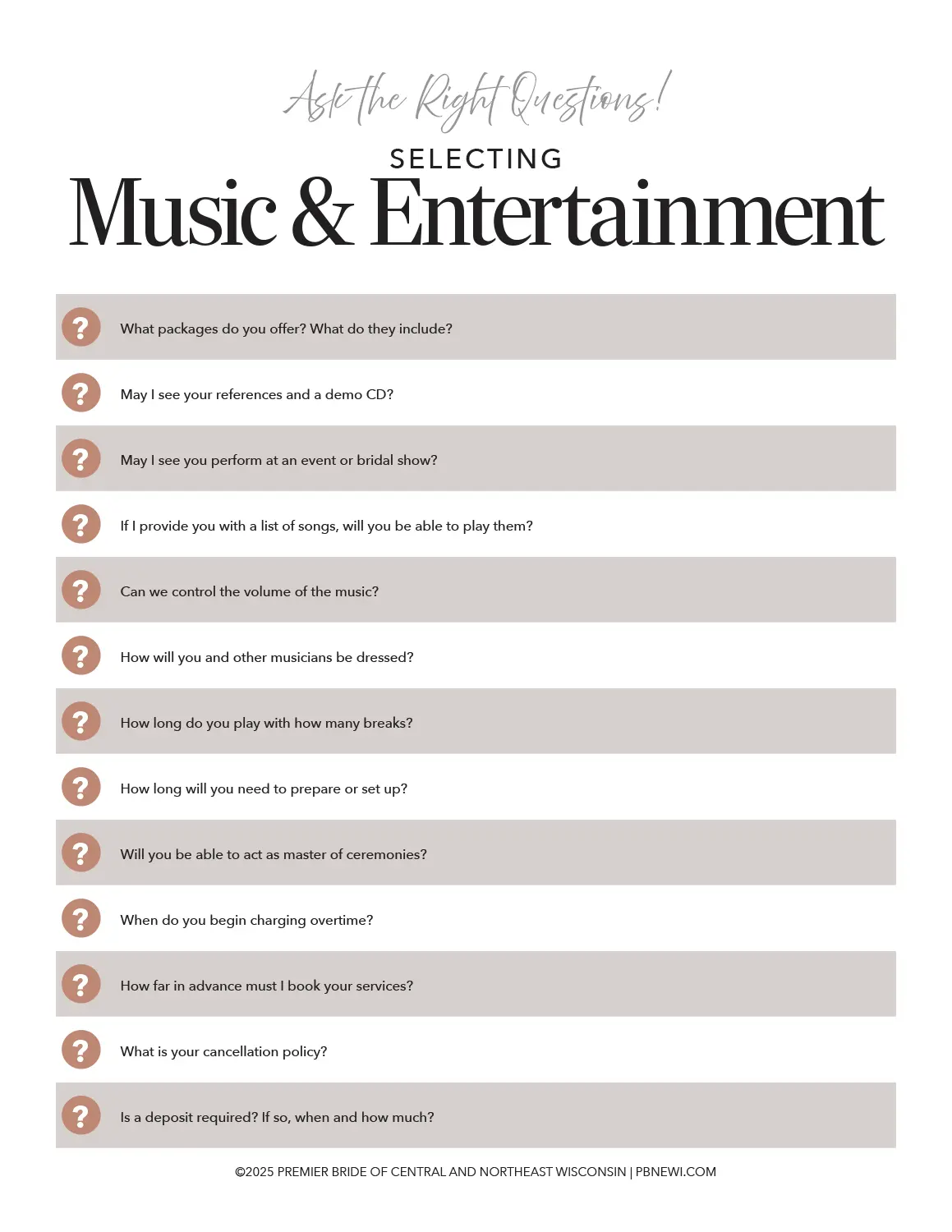
Make sure you start shopping for music and entertainment armed with the right questions to ask! Use this list as a guide and a place to take notes! Download our full planner for even more.

Music you love, the right songs at the right time, and something to get everyone in the dancing mood at your wedding.
First Dance Thinking Out Loud (Ed Sheeran) Die a Happy Man (Thomas Rhett) All of Me (John Legend) Can’t Help Falling In Love (Elvis Presley) ...
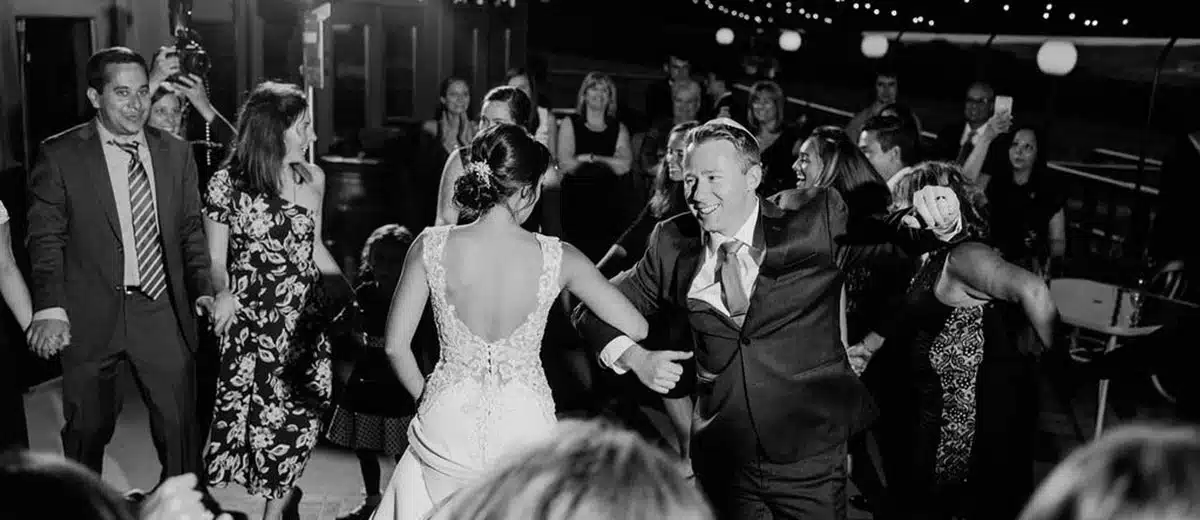
We know that’s what you don’t want when planning your wedding, so let’s talk about what you do want, a DJ that is coordinating your entire wedding day.
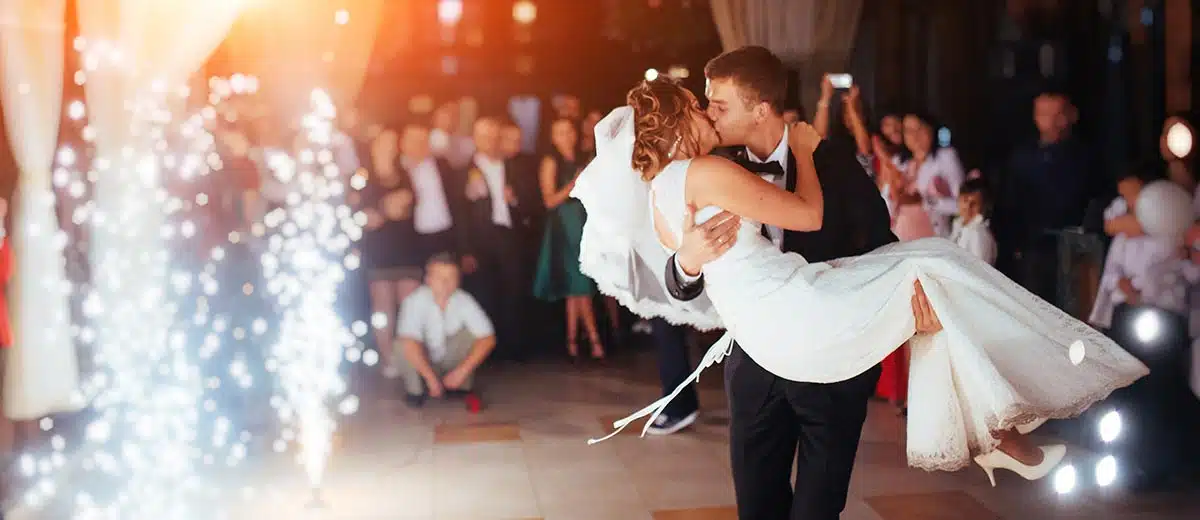
When planning your wedding entertainment, the first question to ask yourself: Band or DJ? Here are some tips to help you decide.
Songfinch creates one-of-a-kind songs from your feelings, memories and stories for monumental life occasions. Everything - the melodies, the instrumentals, the lyrics - is completely inspired by you and created from scratch by a professional musician.
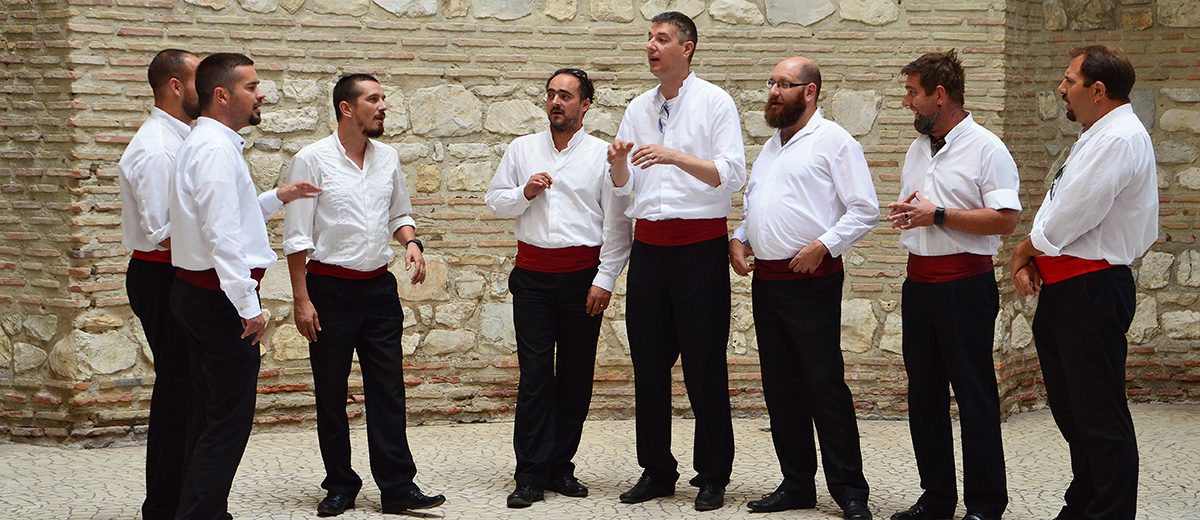
There are many options for wedding music, be it the music for the ceremony or entertainment for the pre-reception cocktail hour. And with the popularity ...
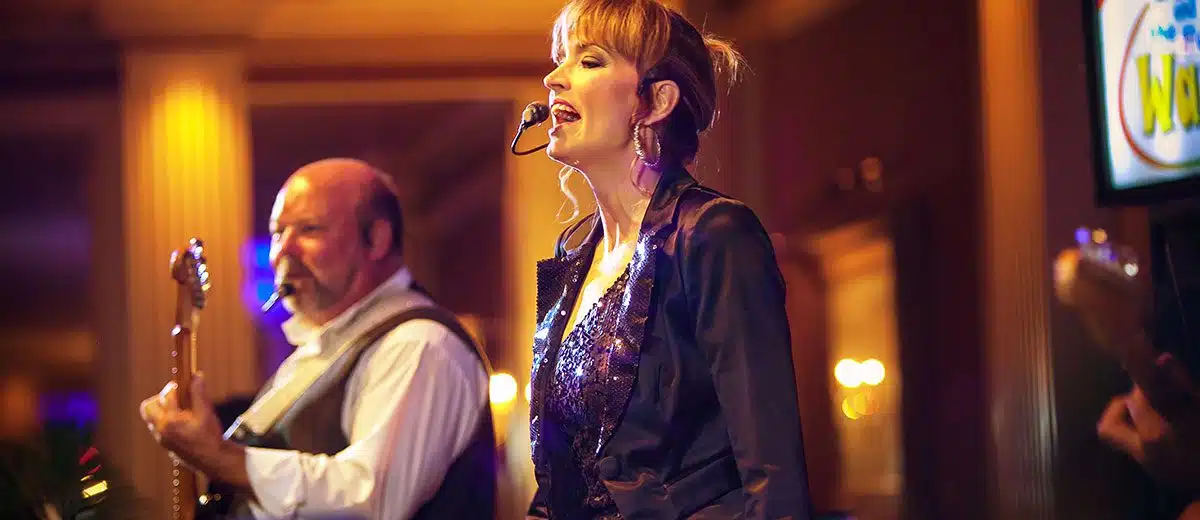
Weddings are rather visual affairs; from the fancy dress to the picture-perfect venue, there’s a lot to see. But nothing sets the mood quite like ...
